| |
 |
|
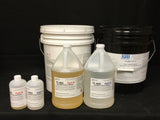
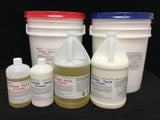
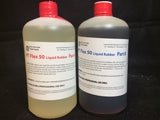
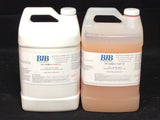
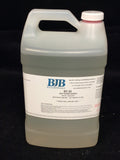
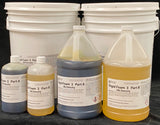
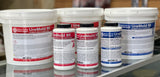
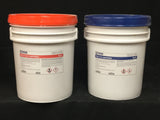
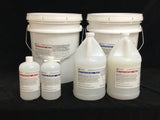
There are two main types of silicones for mold making and casting applications: TIN cure and PLATINUM cure.
Tin Cure Silicone Tin cure or condensation cure silicones are basic two-part systems that yield accurate, chemical resistant molds for resin, foam, plaster, and wax casting applications. Of our silicones, Tin cure silicones are the easiest to work with and do not inhibit (fail to cure) easily. Tin Cure silicones such as the 70 series RTV rubbers require an accurate gram scale for mixing.
Most Tin cure silicones such as 70-25 or 70-30 may be thickened with Tin-Thix for brushing onto vertical surfaces.
Tin cure silicones make great production molds but they do have a short storage life or "library life". Tin cure silicones have a life of 2-4 years depending on use and storage conditions. As Tin cure silicones age they lose elasticity and become brittle. Tin cure silicones such as 70-26 exhibit longer library life but archived molds for wax patterns (art bronze foundry work) may require a long lifespan of up to 20 years or more. We recommend urethanes (such as the 74 series) or Platinum silicones (Platsil® 71 or 73 series) for molds requiring an extended library life.
|
 |
|
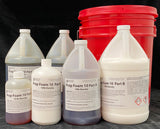
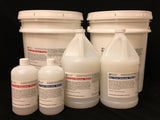
Platinum Silicone Platinum silicones, or addition cure silicones, cure with virtually no shrinkage to a durable, long-lasting, chemical resistant rubber. Platinum silicones are popular with the prototyping industry due to their incredible accuracy and long library life.
Most Platinum silicones such as 71-20 may be thickened with Plat-Thix for brushing onto vertical surfaces.
Molds made with Platinum silicones achieve the highest level of detail. Platinum silicones are recommended for resin casting, foam casting, low temp. metal casting, and archived molds for foundry patterns. Platinum silicones are easy to contaminate if proper care is not taken in surface preparation, mixing, or weighing. Platinum silicones yield excellent results but require a higher level of experience and patience than Tin cure or Urethane rubbers.
|
|


|
|
BITY Mold Supply offers several options for urethane mold making.
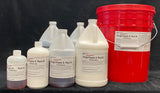
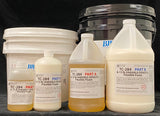
Polytek® rubbers such as the 74 series are popular for both poured molds and brush on molds. 74-30 is a very popular rubber for art bronze wax patterns and plaster casting. 74-45 and 74-20 are relatively new bright yellow rubber compounds that are immensely popular with cast-stone and veneer stone shops.
So many numbers... which one is which? What's the difference? The last two digits in the series number denote the Shore Hardness of rubber materials in the 74, 75, and 77 series. 74-30, for example, is a 30-durometer-urethane rubber, 75-60 is a 60-durometer urethane rubber and so on. Polytek® urethanes are available in a range of durometers from a shore "A" 20 to a shore "A" 95. The Poly 74 and 75 series offer easy mix ratios and excellent working properties. All rubber materials in this series are either 1:1 2:1 or 1:2.
The part "B" in this series will usually require stirring before use and is labeled as such on the containers. Without accelerators these rubbers will cure overnight at room temperature (RTV).
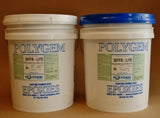
The Polygel series is formulated for brushing or spraying. Polygel is offered in a 35, 40, and 50 durometer. Polygel rubbers self thicken when mixed to form a brush-able paste.
How do I accelerate a urethane rubber? Urethane mold rubbers are heat accelerated or they may be chemically accelerated with the addition of 74/75X. Adding part X will not affect the cured properties or mold life of urethane mold rubbers.
How long will my materials last once they are opened? Urethanes are contaminated by moisture. Your shop environment is critical to the life of the product. The dry, arid climate of the southwestern states (such as west Texas or New Mexico) is best for preserving mold rubber. Humid climates such as Houston, or Dallas Texas will drastically reduce the life of your opened materials. Air conditioned shops are helpful but we recommend that you spray PolyPurge into your part A of all urethanes after opening. This will replace the moist air with a dry gas.
|
|


|
|
BITY Mold Supply offers the finest and most complete line of lifecasting supplies.
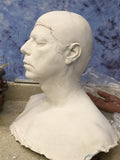
Artmolds Alginates and LifeRite skin safe silicones will give you a variety of life-molding options.
Artmolds MoldGel Alginate is recognized as one of the best performing alginates for lifecasting. MoldGel Sloset offer a long working time and a high tear strength (for alginates). Fast setting resins, such as Easy Flo 60, may be cast into MoldGel, as well as plaster, wax, and Gel-10 silicone.
FiberGel is a new fiber-reinforced alginate for casting the full head or large areas of the body at one time. FiberGel has amazing strength and retains water content so shrinkage is minimal for several hours!
The Artmolds alginate family would not be complete without a dental grade alginate. Use Hollywood Impressions for making accurate molds of teeth and the interior of the mouth. Hollywood Impressions is a fast setting dental alginate.
LifeRite Skin Safe silicone is a new Platinum silicone lifecasting material for super accurate lifecasting. LifeRite molds reproduce very fine detail. Lifecasts made with LifeRite silicone may be used as permanent molds since they do not have the short lifespan inherent in alginate materials.
|
|
|
|
As any experienced lifecaster will tell you, getting alginate to stick to itself is next to impossible. This unfortunate fact of life makes large casts difficult and requires careful planning and several skilled, fast helpers. Algislo™ bonding agent allows you to break the rules. Spray Algislo onto alginate that has cured and apply fresh alginate. Algislo creates a strong bond between old and new layers of alginate. Algislo may also be used to retard the set time of alginates and may be sprayed on the surface of cured alginate when adding fiber for bonding support shells.
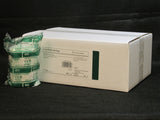
BITY Mold Supply also offers Plaster Bandages in all widths, including 4", 6", 8", 12", and 18", all in 5 yard lengths. Plaster Bandages make great lifecast support molds and may also be used for fast mother mold construction on rubber molds.
|
| |
|
We carry Poly Latex 60, a high quality, brushable latex for making concrete molds. See our online catalog for pricing.
|
| |
|
| |
|
|
| |
|
|
| |
|
|
|